Thursday, August 18, 2022

Maja Trochimczyk's New Book, "Bright Skies" (2022) with Poems to Heal, Amuse, and Inspire


ISBN 978-1-945938-49-8, color paperback
US Trade (6 x 9 in / 152 x 229 mm), 184 Pages
85 poems, 160 color photographs, 6 portraits
ISBN 978-1-945938-52-8, eBook in ePub format
ISBN 978-1-945938-54-2 color hardcover.

Maja Trochimczyk Reads "From Minium Chronicles", "Ocean of Jade" and "On Landscapes: A Guidebook" from the "Bright Skies" on YouTube, June 2022 (11 minutes): https://youtu.be/m0i17jPRPLs

Maja Trochimczyk Reads selected poems from "Bright Skies" on YouTube, June 2022 (30 minutes):

Maja Trochimczyk dedicates this collection of poems, “Bright Skies,” to her children and grand-children, asking them to read and enjoy her verse “when they grow up.” The volume features 85 poems written in 2009-2022 and organized into five sections – Spring, Summer, Babie Lato, Autumn and Winter. The seasons of poetry include reflections on nature, beauty, love, life, and spirituality. The focus is on positive emotions, learning to be calm and content, full of compassion and wisdom. It is a life-long quest, and these poems are an invitation. 


The poems are illustrated with 160 photographs taken in the poet’s neighborhood – Big Tujunga Wash, Angeles National Forest, Descanso Gardens, and Oxnard Beach. The surprising “Coda” brings a set of recipes for old-fashioned Polish dishes mentioned in poems. Bringing together favorite memories of her Polish childhood – making and flying kites, plays with soap bubbles – and the delights of sunny Southern California gardens, parks, and beaches, the book includes lessons how to seek and find the daily dose of domestic bliss. This book is a legacy from a well-lived life, and a companion to "Into Light: Poems and Incantations" - another collection of positive, inspirational poetry illustrated with photos.


Preface

This collection of poems is inspired by the births of my two granddaughters, Aurelia, born on 12 September 2021 and Juniper, born on 16 September 2021.  I planned to write a book of poems for each girl, just as I did for my grandson, Adam, born on 16 September 2016.  The poetry book dedicated to him, entitled I Give You the World, contains one long poem describing things that I love and cherish in this life, illustrated with photos of my family, travels, and gardens. An abridged version without family pictures appeared on my blog; this version is further shortened here. The purpose of the book for Adam was to introduce the Polish-born boy to his American & Canadian family and their lives. He now lives in the U.S. and is able to share these delights in-person.

Since Adam got “the whole world” as his birthday present, what can I give to his five-years-younger sister, Aurelia, and his cousin, Juniper? I found 85 poems and over 160 photographs that I decided to share with them, in a book to be read when they grow up. This is not a children’s book. With gratitude, I described  delights that I found in my garden and home, during walks, adventures, and travels. I wrote about inspirational moments and discoveries, summarizing my life’s wisdom at 64.  This volume of “positive poetry” contains verse originally written in 2009-2022 and is a companion volume to Into Light: Poems and Incantations (2016). It is a necklace of love and blessings; each bead – a poem.

I hope that the readers attracted to the themes of seeking light and enjoying life in the garden will find here something to enjoy, something to think about, and something to do in their own lives. After all, we live in the Garden of Eden and can make this Earth a Paradise, if we only want to.  Enjoy!

                                                                                                                                  Maja Trochimczyk

Los Angeles, 1 June 2022


Table of Contents

 Table of Contents ≈ v

Preface ≈ viii

Prior Publication Credits  ≈ ix


Spring ~Wiosna ≈  3

1.       A Springtime Revelation ≈ 4 

2. Only in California  ≈ 5

3. The Day of a Plum Tree ≈ 7

4. Outside my Window ≈ 9

5. Spring Cleaning ≈ 11

6. An Artichoke of a Poem ≈ 13

7. On Being Green in Vincent’s Garden ≈ 15

8. Da Capo al Fine ≈ 17

9. A Ballad of a New Heart ≈ 19

10. An Invitation to the Dance ≈ 21

11. A Ballad of Angels ≈ 23

12. Practical Advice for a Frazzled Passer-by ≈ 25

13. Skylark’s Lesson ≈ 27

14. Oh, The Art of Looking ≈ 29

15. On Being a Bird ≈ 31

16. the doves of love ≈ 32

17. A Mystery Solved ≈ 33

18. Double Delight ≈ 35

19. Diamond Days in Crystal Gardens ≈ 36

20. This Afternoon ≈ 39

21. From Minium Chronicles ≈ 40

22. The Golden Hour ≈ 42


Summer ~Lato ≈ 43

1.       June in Gold and Blue ≈ 44

2. The Song of the Summer ≈ 46

3. A Tale of a Hare ≈ 48

4. A Drink of Water ≈ 50

5. Mason Bees ≈ 51

6. The Golden Time of Honey ≈ 53

7. Dreaming Bees ≈ 55

8. A Pear in a Tree ≈ 56

9. A Day Trip to Venice, California ≈ 57

10. Carving Sand ≈ 59

11. A Champagne Sunday ≈ 61

12. Aquamarine ≈ 63

13. The Ocean of Jade ≈ 65

14. The 23rd of July ≈ 67

15. Tatarak ≈ 69

16. Flying Kites ≈ 71

17. “Let me go!” ≈ 73

18. Soap Bubbles ≈ 74

19. High Noon ≈ 75

20. Matka Boska Zielna ≈ 76

21. In Morning Light ≈ 78


Babie Lato ≈ 81

1.       On Thursday Afternoon ≈ 82

2. Sapphire ≈ 84

3. Amber ≈ 85

4. A Revelation after Il Paradiso ≈ 86

5. Up, Up, Up ≈ 88

6. From Yesterday’s Dream ≈ 89

7. Sunfire Foxes ≈ 91

8. Sweet Nothings ≈ 92

9. The Year of Crystal Fire ≈ 94

10. Just to Make It Clear ≈ 96

11. A Chromosome Ballad ≈ 97

12. Twin Flame Promise ≈ 98

13. Diamonds ≈ 100


Autumn ~ Jesien ≈ 101

1.      On Cosmic Breath ≈ 102

2. Landscapes: A Guidebook ≈ 103

3. A Cosmic Rainbow ≈ 106

4. Today – For Us ≈ 110

5. I Give You the World ≈ 112

6. A Golden Poem for a Girl of Gold ≈ 122

7. Gold Wishes ≈ 124

8. Juniper ≈ 127

9. The Fierce Explorer ≈ 128

10. The Aril ≈ 130

11. Fall Yucca ≈ 132

12. This Evening ≈ 135

13. Diamond Rain ≈ 136


Winter ~ Zima ≈ 139

1.       California Winter ≈ 140

2. Standing in a Pool of Silver ≈ 141

3. The Antidote ≈ 142

4. A Music Box Christmas ≈ 144

5. Rules for Happy, Holy Days ≈ 146

6. A Ballad from the Field of Glory ≈ 147

7. A Jewel Box Sunrise ≈ 150

8. Winter Solstice ≈ 152

9. The Star of Christmas, the Way of Light ≈ 154

10. Gifts ≈ 156

11. New Year’s Day in the Wash ≈ 158

12. Your Rainbow ≈ 160

13. Imagine, a Poem of Light ≈ 161

14. A Declaration ≈ 162

15. Arbor Cosmica ≈ 164

16. Hymn of Light ≈ 166


Coda – Recipes for Poems ≈ 168

Spring – Mazurkas ≈ 168

Summer – Pickled Pears and Plums ≈ 169

Babie Lato – Szarlotka ≈ 170

Autumn – Bigos and Salads ≈ 171

Winter – Barszcz, Kompot and Kutia ≈ 172


About the Author ≈ 173


SPRING - WIOSNA

Outside my Window


A round spot of gold light

appears on the slope of my California hills

green in the spring, shadowed by rainclouds.


Suddenly, an epiphany of light, a hole in the sky

appears among thickening shadows, dusk

approaching soon, much too soon.


The bright circle stretches into

an arrow, points west, along the ridge

and the gully. The arrow of light, my arrow

tells me to go, do, act, lead and follow.

Be the light, bring the light. Enlighten.


Before I can even reach for pen and paper

to write down this command, this call to action,

it is gone.  All is shadow now. Murky darkness.


Yet the memory of cloud epiphany lingers,

etched onto my retina. This spot of light,

this arrow will always be with me —

every day, each morning I will turn the circle

of contemplation into the arrow of action,

the dawn star into a comet, inexorably 

reaching its end.


Is it not the story of my life?

This spot of light on a mountain meadow

after one winter storm, before another?


I catch it, hold it, and keep it safe

among my treasures. Things not to be

discarded.  Unforgettable thoughts.


Another pearl for my precious necklace

woven from brilliant moments — 

jewels of a well-lived life.


SUMMER - LATO

Matka Boska Zielna


~ for Mother of God of the Herbs (August 15)


Look at the greening hill slopes charred by last year’s wildfire

that’s magic. Look at the mountain sunflower that grew

at the edge of the asphalt on Oro Vista road, it already blooms

out of nowherethat’s magic, too. The postcard-size garden

by the old, wooden house, a shack, reallyfills with flowers

every spring. Fruit appears on orange trees after bees collect pollen.


The scent of sweetness, the cheerful noise of bee wings

is it not far more miraculous, a thousand, a million times

more delightful than the 100 floors of steel-metal-glass

of skyscrapers proudly pointing at the sky? Incomparable

with a patch of weeds, nature’s miracles of renewal.


How proud we are of our empty metallic constructions

that will rust in the jungle, abandoned, like stone pyramids

of the Mayas, shrouded by vibrant green of leaves and

branches. Thousands of years of human fame obliterated

by the steady, living, fertile abundance, the overflowing

force of life, of matter, our Mother.


Roots, shoots and tendrils spread out, germinate,

flow through the soil in search of water, nutrients,

life, more life, ever growing, ever richer, dancing,

singing the abundance of beingthe song of creation

we are we are we arewe are all 

we are oneoneone


First published in Quill and Parchment, May 2022


BABIE LATO

Diamonds

There is Universe within my heart

A myriad galaxies dance in my mind

I’m a microcosm of Divine design


In a seashell there is an ocean

In dark coal mine white diamonds grow

In your eyes I find ageless wisdom

The One Love that sustains us all


In your guilt I see my darkness

In your beautyradiance and light

In your voicethe calling, the calling


Mountain air on a spring morning

Sparkling diamonds, radiant and pure

For all forevers you enfold me in Love 


First published in Rose Always, rev. ed. 2020


AUTUMN - JESIEN

The Aril


“Aril” is the word for me.

Not “arid”—as in the desert of wasted years, hours.

Not “arduous” —as in working so hard every day

to make ends meet. These ends, they never meet, anyway.


Just aril. As in my garden at noon. As in ruby-bright

pomegranate shining in full sunlight. A jewel bowl

of arils I pick from exploded fruit to freeze for winter.

A handful of overripe arils that taste rejuvenating,

like fine wine. Tartly-sweet juice stains my fingers

burgundy-red—or should I say, aril-red?


Oh, the delight of untold riches!


You watch me blissfully chew the seeds

and say in disbelief: “You eat them whole? Really?

When I was a boy, my brother told me that

trees would grow out of my ears if I swallowed

pomegranate seed—huge trees would grow

and grow and grow and grow…”


We laugh at the vision of these arid, forgotten years.

It was an arduous journey that took us through

the wilderness to this vivid moment of sharing

this magic, life-giving nectar of arils,

ruby-red arils.


WINTER - ZIMA


Arbor Cosmica

                             ~ for my children


No fear, no hate, not even a mild dislike*—

we leave our heavy burdens, shards of memories

broken, all too broken, at the bottom of crystal stairs

beneath clouds of white camellias, petals swirling

through air like the snow of forgetfulness


Perfect symmetry of blossoms

points the way—up, up, always up

rainbow crystal stairs, revealed

one by one as we ascend—inwards,

outwards—dancing spirals of our DNA


We get to know this place—these depths,

these heights—for once, for all lifetimes


With each step, pure notes resonate

and expand into clear, spacious chords—

the music of the spheres rings out, wave by wave

expanding from our open hearts


Each chord—harmonious, different—

each melody in this vast symphony

sweetly twines around another, and another

until all are One Song, One Wisdom—

of stem and flower, of leaf and root

in this Cosmic Tree of humanity


Arbor Cosmica—


We have been here

all along without knowing


First published in the California Quarterly 46:4, 2019


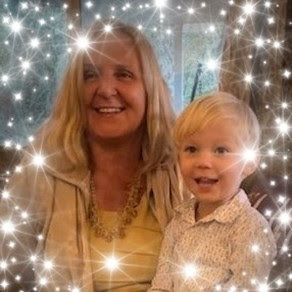
Maja Trochimczyk with Grandson Adam, 2019

ABOUT THE AUTHOR


Maja Trochimczyk, PhD, is a Polish American poet, music historian, photographer, and non-profit director. She is the author/editor of eight books on music and Polish culture in Polish and English,  as well as five poetry volumes and four anthologies, most recently We Are Here: Village Poets Anthology (co-edited with Marlene Hitt, 2020). A former Poet Laureate of Sunland-Tujunga, she is the founder of Moonrise Press, President of the California State Poetry Society, Managing Editor of the California Quarterly and Poetry Letter published by the CSPS, and President of the Helena Modjeska Art and Culture Club, promoting Polish culture in California. Hundreds of her poems, articles and book chapters appeared in English, Polish, and in a variety of translations. She presented her research at over 90 international conferences and received many awards from Polish, Canadian and American institutions. Among other honors, she is the winner of the Creative Arts Prize from the Polish American Historical Association (2016) for her two books about Polish civilian experience during WW II and its aftermath, Slicing the Bread and The Rainy Bread. Since 2010, she has maintained a series of blogs on poetry, Polish history and culture, with a total readership of over 970,000 visitors: moonrisepress.comcaliforniastatepoetrysociety.compoetrylaurels.blogspot.comchopinwithcherries.blogspot.com, etc. 


Thursday, June 9, 2022

Summer Fun - Writing Silly Limericks with My Grandson Adam


When I was a student in Poland, high school or college, I had to work extra hard during the year, since I attended two schools simultaneously, regular high school with math-physics profile, and music high school in the afternoons. Most days, I left home at 7:30am and got back at 8pm or so, taking a tram from one school to another. I only had time for serious reading, assigned novels or textbooks, and  for working on projects and studying for exams.  

But as soon as school was out in the middle of June, fun reading began.  For summer vacations I travelled to the homes of my grandparents in two Polish villages, Trzebieszow near Lukow in Podlasie region north west of Lublin and Bielewicze near Grodek Bialostocki 10 km from the Soviet border.  There, I read summer novels, fantasy, science fiction, and romances in that order, and lots of silly periodicals, like Przekroj with their light-weight stories and fun news tid-bits.  The "summer is for fun" reading mode ended by September 1, the start day of the next school year.  

Fast forward to today. I do not have the time to ever use up my vacation days. At one point I did not accrue any vacation days for the whole year, fixed at 240 hours. I can take a day or two off here and there, but a whole week, month or two months? Never! There is so much to do and so many things I'm responsible for.  Then, on weekends and in the evenings, I do my own volunteer work, presiding over two nonprofit organizations, publishing books, organizing poetry readings and other events...  So the year is a blur of work, work, work... with some small intermissions of gardening, walks in the park, or day trips to the beach... Not much "light-weight" stuff is going on. 

But these moments of taking the mind off the difficult challenges of life and the endless stream of daily responsibilities - I must, I must, I must...  are so precious and delightful. Recently, I spent two afternoons with my 5.5 year old grandson, Adam. On the first day, he asked me where was the "long noses" book - which is Edward Lear 's set of funny limericks with grotesque drawings for illustrations. Since I did not have it with me, I explained what a limerick is and made-up an example, that I completed with Adam's help. He then proceeded to creating a series of limericks on his own. On another day, as we were walking back from the park, I was on the roll singing children's songs in Polish to the baby, 9 months old Aurelia. Then, I switched to my favorite American nonsense song: "There was an old lady..." Adam promptly added four more stanzas, and now the song is much longer. Enjoy!

Grandma and 3-year old Adam on the beach, Manhattan Beach, 2019

My first sample limerick used the location from Edward Lear's book plus, of course, an absurd long-nose story: 

There was an old man of Timbuktu

who did not know what to do

        so he pulled on his nose

        and made it a hose,

this old man of Timbuktu.


A Box of Limericks by 5.5 year old Adam 

I explained to Adam that a limericks has five lines, two in pairs and an extra that wraps it up, the first two are a set-up and description of status quo, the next two - action and result, and the final line the conclusion, or morale of the story. Then Adam helped making up the following limerick, by adding the middle lines, starting from the kitten  in the second line:

There was a little girl in the city

who really wanted a kitten.

       When the kitten said "meow"

       she did not know how

so she left the kitten in the city.

That was good, so Adam moved on to his own. You have to admit, the boy has imagination:

There was a little boy with a snake

that had a terrible tummy ache.

           And he put it in a cage

           so it did not eat his page.

That little boy with a snake.

Now Adam was on the roll and came up with this:

There was an old man in a plane

who ate all of his candy cane.

           He made his nose too long

           and was completely wrong.

This silly old man in a plane. 

As you see we are still in the "long-nose" subject matter that seems to be pre-eminent in the limerick genre for Adam, taught that by absurd illustrations in Edward Lear book of nonsense rhyme. . . 

So he moved on to another idea.  We had a discussion about the middle lines in the next limerick, since I wanted them to be slightly less scatological, you know, the toilet humor that little boys revel in:

There was a young man who was smart,

so he always wanted to fart.

         His farts were smelly

         and he peed on his belly.

This young man who was smart.

I thought maybe we should say in the middle something less gross:

          he ate too much jelly

          so his farts were smelly

But Adam was adamant about the wording, and he'd have none of that. So there.  

At this point in time, I started writing down the limericks Adam made up, so he took a crayon and wrote another one in shorthand (just some letters per word), with his own illustrations:

There was a young man called Candy Cane

that he saw a big hurricane

          and he lost his sock

           as he went for a walk

This young man in the hurricane.

The young man had just one sock on in the picture, of course. Not surprisingly, this limerick and the next one that Adam made up were variant of the "candy cane in the plane" limerick. Children like stretching their fun, by creating variants of a pleasant or amusing experience. This is one of the secrets of children's playing games. Adults seem to lose this talent. 

There was an old man on the plane

who was the travelers' bane

          for his ran out of his chair

          and bumped the pilot everywhere

this silly old man on the plane.

Adam forgot to insert the second line, so I suggested adding the travelers' bane since it went well with attacking the pilot. Adam approved, so here it is. 

Finally, since we had played a Totoro Mail Service earlier - with a plush Totoro delivering a FedEx envelope with a picture of a robot helper and a crocodile inside - the Totoro appeared in the limerick as well, also illustrated by Adam.

There was a Totoro and a boy

who wanted to find a good  toy.

           They jumped over the fence

           and found a two-pence

this Totoro and the boy.


Since I love Totoros (benevolent, furry spirits of the forest that appear and disappear at will, see the animated film of that title), I like this particular limerick the most. It is a classic. 

I wanted to take Adam's drawing for it home, but Adam folded the three limericks he wrote out and packed them in the crocodile chocolate box. These were his limericks after all. I was only allowed to take the robot.  I like inserting these pictures, with dates, between various documents, for fun. 

Let's fast forward to the singing day. Ever since my kids attended a folk performance at the La Crescenta public library where an old woman with a dulcimer (American folk harp or auto harp) sang it in a plaintive tone with lots of rubato and suspension of movement, I absolutely love the song "There was an old woman who swallowed a fly..." there is something so completely absurd and imaginative in this song, that I loved singing it to the kids even without the dulcimer.  Here's the original version:


There was an old woman who swallowed a fly.

I don't know why she swallowed a fly - perhaps she'll die!


There was an old woman who swallowed a spider.

That wiggled and jiggled and giggled inside her.

She swallowed the spider to catch the fly

I don't know why she swallowed a fly - Perhaps she'll die!


There was an old woman who swallowed a bird.

How absurd to swallow a bird.

She swallowed the bird to catch the spider

                    That wiggled and jiggled and giggled inside her.

She swallowed the spider to catch the fly

I don't know why she swallowed a fly - Perhaps she'll die!


There was an old woman who swallowed a cat

Just fancy that, to swallow a cat!

She swallowed the cat to catch the bird
She swallowed the bird to catch the spider

                    That wiggled and jiggled and giggled inside her.

She swallowed the spider to catch the fly

I don't know why she swallowed a fly - Perhaps she'll die!


There was an old woman that swallowed a dog

Oh, what a hog, to swallow a dog!

She swallowed the dog to catch the cat
She swallowed the cat to catch the bird
She swallowed the bird to catch the spider

                   That wiggled and jiggled and giggled inside her.

She swallowed the spider to catch the fly

I don't know why she swallowed a fly - Perhaps she'll die!


          There was an old woman who swallowed a goat

She opened her throat to swallow a goat.

She swallowed the goat to catch the dog  
          She swallowed the dog to catch the cat
She swallowed the cat to catch the bird
She swallowed the bird to catch the spider

                   That wiggled and jiggled and giggled inside her.

She swallowed the spider to catch the fly
 
I don't know why she swallowed a fly - Perhaps she'll die!


There was an old woman who swallowed a cow

I don't know how she swallowed a cow.

She swallowed the cow to catch the goat
          She swallowed the goat to catch the dog  
          She swallowed the dog to catch the cat
She swallowed the cat to catch the bird
She swallowed the bird to catch the spider

                    That wiggled and jiggled and giggled inside her.

She swallowed the spider to catch the fly

I don't know why she swallowed a fly - Perhaps she'll die!


There was an old woman who swallowed a horse...

She died - of course!


Chord Zither, manufacturers Adolf Larsson, before 1904. Photo Sofi Sykfont. Included in Musik- och teatermuseet (Music and Theatre Museum)'s instrument collection. Wikimedia Commons.

I found this song online, but the word "woman" was replaced by "lady" in most versions. Everyone knows that ladies do not swallow cats, cows and goats, so it should have been "woman" not "lady" - but that's an issue for another discussion, of replacement language on the Internet. BTW, do you know that the word "lamb" in the famous image of "lion with a lamb" of eternal peace in the Bible was replaced by "kid"? As in kid-goat? As if goats were not symbols of evil, "scapegoats" carrying the sins of the Israelite community into the desert. So there should be a "lamb" not a "kid" in the Bible... and a "woman" not a "lady" in the song. But who made the change? And why?  Let's leave this topic to another day.

So, to return to my story, I was singing quite loudly as we were walking home; singing shortens the distance, as it is well known. When I reached the end with "horse" and "died of course" - Adam said - "That's it? That's too short." And he sang: "There was an old woman who swallowed a whale and she grew a tail..." At which point I burst out laughing in the middle of the crosswalk, startling the drivers, who smiled at Grandma and Grandson having so much fun together.  We sang:

There was an old woman who swallowed a whale.

She grew a tail for she swallowed the whale. 

She swallowed the whale to catch the horse 
She swallowed the horse to catch the cow
She swallowed the cow to catch the goat
          She swallowed the goat to catch the dog  
          She swallowed the dog to catch the cat
She swallowed the cat to catch the bird
She swallowed the bird to catch the spider

                              That wiggled and jiggled and giggled inside her.

She swallowed the spider to catch the fly

I don't know why she swallowed a fly - Perhaps she'll die!

That was very satisfactory indeed. Well done, Adam!  But we had to deal with the horse, I reminded the boy, since it was the horse that had to chase after the cow and the swallowing had to be successful, so that the old woman could continue her grotesque behavior. Here's what Adam came up with:

There was an old woman who swallowed a horse

On the obstacle course, she swallowed the horse.

She swallowed the horse to catch the cow
She swallowed the cow to catch the goat
          She swallowed the goat to catch the dog  
          She swallowed the dog to catch the cat
She swallowed the cat to catch the bird
She swallowed the bird to catch the spider

                              That wiggled and jiggled and giggled inside her.

She swallowed the spider to catch the fly

I don't know why she swallowed a fly - Perhaps she'll die!


That was very good, and we reached home by then. But... I reminded Adam, the size difference between the horse and the whale was too large, maybe we could add some more large animals to the story? We tried bison, buffalo, and elephant, but none of the words rhymed with anything we found even remotely funny, so we moved on. In the garden, Adam decided to try even larger sizes, with the following result:

There was an old woman who swallowed a monster.

She missed her concert, for she swallowed the monster. 

She swallowed the monster to catch the whale
She swallowed the whale to catch the horse 
She swallowed the horse to catch the cow
She swallowed the cow to catch the goat
          She swallowed the goat to catch the dog  
          She swallowed the dog to catch the cat
She swallowed the cat to catch the bird
She swallowed the bird to catch the spider

                              That wiggled and jiggled and giggled inside her.

She swallowed the spider to catch the fly

I don't know why she swallowed a fly - Perhaps she'll die!        

OK, everyone knows that monsters are different sizes and one could easily be larger than the blue whale, so indeed this monster could swallow the whale. But Adam wanted to go global, an important task in the age of globalization of everything.   His choice line was "There was an old woman who swallowed the Earth giant" - but I did not like it, it was too long and did not have another line to go with it. I suggested we repeat the Earth and put the "giant" into the second line.  Here's the end result:

There was an old woman who swallowed the Earth.

She choke to death on the giant Earth,

and the whale and the monster, and cow, dog, goat, cat and the horse...

She died, or course!  

Well, I'm pretty sure these were the two most productive poetic afternoon I spent in recent months. And the many times we laughed out loud while making up these silly rhymes? So incredibly, fantastically, unexpectedly heart-warming.  The world glowed around us, full of creativity and love. 

Building the forest and "Wild Things" from "Where the Wild Things Are" 2020


BONUS ON RECORDINGS

Here's a version by Burl Ives, pretty old-fashioned, with "I know an old lady" to start with, and the spider that "tickled" inside her... The melody is almost perfect.

Another old recording, by Tracy Newman done in 1965, does not have "fancy that" but "imagine that"

A fairly faithful animated rendition appeared in a nursery rhymes series: 

In contrast to these traditional renditions, the newer updates do not allow the old "lady" to die so she can only "cry" instead of dying at the end. This editorial change defeats the whole purpose of the rhyme - to familiarize children with the fact of death in a humorous way, without fear or horror. So when it was time for the "horse" - the rhyme was changed to "I'm joking, of course."  Ridiculous. 

But interestingly, the animation of an "old lady" swallowing all these things was pretty gruesome, and the lady herself not old but rather middle aged in a gray wig, showing a bias against old people. Plus she definitely was not dressed as a lady, wearing leggins, Ugh boots and an oversized sweater. Lady? She looked quite fashion-challenged! You want to have a lady? Dress her in a fancy dress, hat, with pearls, gloves, high heels and a lovely sun -umbrella and then make her swallow a cow... That would be an image to laugh about.  

If you do not know what a Totoro is, below you find a photo of my other granddaughter, Juniper at four months encountering a plush Totoro for the first time. 

Baby Juniper and the Totoro


Monday, April 18, 2022

Spring Cleaning in The Year of Crystal Fire, Easter 2022


It is so good to be sixty-four. My daughter sang me the Beatles' song on the beach, with ukulele, delightful belated birthday gifts during all too rare family encounter. We live too far apart, I do not like calling, the phone traumatized me when I was just four year old - that black box on the wall is my aunt? And the fear persisted, reducing my conversations to 20 seconds - what do you need? Which street corner should I drive up to pick you up? Do I need to stop to buy bread and milk? This sort of thing, not thoughtful, insightful conversations... These are best done in person, in a dialog of souls, during random meetings at poetry readings, champagne lunches, on the beach... 


We had a lovely event in our community, Passing of the Laurels to the next Poet Laureate of Sunland Tujunga. My term as PL no. 6 was in 2010-2012; this time Pamela Shea passed the laurels to Alice Pero, both accomplished, graceful, insightful poets.  


I brought real laurel leaves in bouquets for poets, and huge artichoke leaves in bouquet of silk flowers, to decorate the stage. Looked pretty enough,  they danced in the breeze, making silk blossom seem alive and real. I picked all these leaves and branches from a friend's garden, where I was amazed at the sight of the artichoke plant which made me think of poetry. I told a friend, poet about this experience, and a poem came about. Here it is.


An Artichoke of a Poem


Writing poetry is like growing 

artichokes, from a seed of invention,

the code for the unknown, sprouts

an immense plant, with spreading 

silvery-green fronds of tender beauty – 

poem after poem you spin out and admire,

so proud of your way with words,

constructing verbal edifices

with arduous labor.


The heart comes at the end – 

a flower bud no larger than your palm

that does not even open before you pick it  

to steam and taste bits of elegance 

and sophistication.


Hight above your silver tower of gigantic 

soft and spiky leaves – a paradox of a plant, 

really, its purpose beyond comprehension –

grows just one artichoke, a golden bud 

of a poem where each word is in its place,

each insight so accurate and keen,

it pierces the reader’s mind 

with knowing. 


You discard abundant, decorative

leaves for compost, to nourish next year’s crop –

just one gourmet treat, an artichoke of a poem, 

blooming from so many ornamental words 

you string together day after day, until 

the mystery 

          reveals itself

                   to surprise you

                           with its inevitable

                                      simple grace –


Well, that was insightful enough for the Poet Laureate of Artichokes and Bay Leaves (another name for Laurels).. .  Celebration took a lot longer to organize than to experience. Then it was time to continue the internal dialogue on paper, in a dialog with old, discarded selves.  Spring cleaning is good for that.  


Spring Cleaning


This morning

I declawed the cactus, cut the spikes 

from the tips of agave leaves

so they do not scratch children looking for 

chocolate eggs on Easter.


I cleaned out the pantry, sorted out 

one bookshelf and my past

carefully discarding useless fears

and fading disappointments. 

I filled the crystal bird dish 

with water for finches, filled my heart 

with affection and delight


I arranged lilacs, and daffodils 

into fragrant bouquets, green with 

camellia leaves and palm fronds left over 

from singing Hosanna in the church.

I arranged mt thoughts

Into a singular clarity of purpose

Tranquil lie the pacific at sunset

With tenderness of immense strength.


Now, I only have to breathe in 

noon light, to set old pain, 

anger and resentment on fire

expel the ashes in a shower of sparks

with diamond rays so brilliant 

they make me into a supernova

a revelation, cosmic, bright –


Cleaning is necessary and healing. The "cleaning" of past emotions and traumas is done once they do no longer hurt, are not painful, just there, fondly remembered, examined and set aside on a shelf of  favorite things - ornamental crystal spheres, a mosaic flower vase from Ravenna, a wooden angel from Krakow, a gold and cobalt teacup and saucer of my Mom, children's photos and music boxes.  So, after a long, long, long love story, I could finally write its coda. 


The Year of Crystal Fire


Soft patter of pink rose petals 

falling onto the floor. The scent of French Perfume 

in the air. The heartbeat  stops. The world ceases its rotations.


I see the light in your eyes shining

through the slit in your motorcycle helmet,

as you pass me on the street. In a millisecond

of recognition you take me in – whole, 

serene in turquoise and aqua – then, you look away

far into the past we shared so shamelessly,

beyond measure – 

the year of passion

the year of dogs that brought us together

the year of longing

the year of dolphins dancing on salty waves 

the year of absence

the year of waiting in darkness – 

                      30-second phone calls answered by a machine

         the year of tiger lilies

         the year of nine-tailed foxes – 

                       smooth with seduction and delight


Yes, I liked that year the most – 

as we grew into our demonic, daimonic selves,

created new galaxies, parallel universes 

out of our other-worldly love.


Timelines shift.

The cosmic windows 

keep opening and closing.

Soft patter of pink rose petals 

on the flying carpet 

takes me into

the year of passion

the year of tiger lilies

the year of diamond kites soaring above hilltops

the year of stardust

the year of crystal fire


Remember that our emotions create the world we live in, if I project anger, hurt, resentment, disappointment, regret out to the universe, its cosmic mirror will reflect all these back, so I will get even more reason to feel anger, hurt, resentment, disappointment and regret... But if I project joy, serenity, gratitude and love, I'll be surrounded by even more reasons - people, events, unexpected gifts from cosmos to feel more joy, serenity, gratitude, love. My heart will expand and open. I'll be happy. This "pursuit of happiness" is a guaranteed right in America. How sweet!


Flying kites on the beach and in the mountains:


Redondo Beach, California
https://youtu.be/otEVtfnbOGM (Kite Festival)

Mandalay Beach, Oxnard, California 
Three Kites high up in the clouds: https://youtu.be/foOY2QZmRBc
Three Kites, continued: https://youtu.be/lan3bq45A9s

Hermosa Beach, dancing kites, soaring high above:
https://youtu.be/g6XXJTEu7t0 Three kites in Hermosa Beach
https://youtu.be/sdmvgIIlyfY Three kites in Hermosa Beach
https://youtu.be/OB27nE1uFIs Swirling Circle in Hermosa Beach

Kites in Angeles National Forest mountains, Rim of the Valley Trail:
Diamond Butterfly: https://youtu.be/ddCJsAOOGlc (strong wind, unstable)
Flying Diamond: https://youtu.be/EveaI9O8Qsk (blue skies)
Swirling Circle: https://youtu.be/9C3p-KhHnOU (above hills)
Delta Sharkie: https://youtu.be/YJuFji99JY8 (chemtrail stripes)
Laughing Dolphin 1: https://youtu.be/BtXErYfMxuE (skies with chemtrails)
Laughing Dolphin 2: https://youtu.be/-Vj7DEXVZSs (skies with chemtrails)
Laughing Dolphin 3: https://youtu.be/_i2HaGGGoyU (blue skies, one stripe)
Laughing Dolphin 4: https://youtu.be/wsv8V77H4gc (in sunlight)
Laughing Dolphin 5: https://youtu.be/uZOdkTaqTts (dancing around the moon)


Tuesday, March 1, 2022

A Tall Glass of Water and Three Blood Oranges - new poems in California Quarterly


The seasons in California are so different from the seasons in Poland. It is hard to get used to, and I always feel bewildered, not just delighted, when citrus fruit ripens on my trees in January and February, so I have a juicy supply of Vitamin C and other essential minerals until at least May if not longer.  Pink grapefruit, blood oranges and mandarine - first fruit shines in yellow and orange among dark green leaves, then the trees will bloom in April, filling the garden with incredibly sweet fragrance. The lemon tree blooms and gives me lemons year-round, so it is not as surprisingly extraordinary as the other trees. 

I celebrate their gifts every morning and wonder why "pink" grapefruit and "blood" orange if they are the same hue inside? 


FROM MINIUM CHRONICLES

               ~ for my children


A tall glass of water and three oranges, 

three blood oranges from a tree I planted

ten years ago in my Sunland garden.


A tall glass of water... Am I a lump of clay

that's returning to Earth? Ashes to ashes?

The journey's done, nothing remains?


Am I a star of unsung brilliance hidden in a fragile body –

learning, collecting wisdom of limitation, before 

my triumphant return to the glory of timeless Now?


Am I saved? Redeemed? Do I need a Savior? 

Am I my own savior, perhaps? What is true?

What is real? Ashes to ashes or light into Light?


A tall glass of water and three blood oranges

for breakfast. I'm grateful for the knowledge 

they impart. What I am. What I'm made of.


The abundance of rain and sweetness of sunlight

fills the fruit with fragrant, rosy juice, under

the soft, pliable rind – so lovely inside and outside.


A fruit of the earth, air, water, fire nourishes me

with elements. The fruit I made that now makes me  

full of morning happiness in the winter rain. 


Soothing patter of raindrops on the patio roof

assures me that questions do not matter,

answers do not matter either. 


It is the NOW of breathing, of tasting that

slightly tart, refreshing orange I grew, a jewel

I add to the beads of memories I keep.


~ Maja Trochimczyk, January 2022

Published in California Quarterly 48:1, Spring 2022


A garden is a shelter, a hermitage, and an oasis of peace and beauty. I have always preferred spending days in my grandparents' village homes than in Warsaw, full of cement, grayness and armies of red tulips in the spring. The chaos of branches, grasses, bushes, the lovely baby blue sky with white puffy clouds overhead - the buzzing of bees and birdsong. I was able to reproduce this beloved landscape of my youth here in California. Not exactly, in some ways missing the mark - no family here, no Polish language or birds - in other ways even better, with astoundingly beautiful hills and intense sunlight, bringing out colors from the sky, trees, flowers. Colors of intensity unheard of in Poland, where, so much further north, everything is subdued as if a dose of melancholy was poured into each color, each flower, each leaf. 


But life surrounding and sustaining us is as vibrant here in California as there in Poland. As vibrant, as life-giving as oxygen that trees make and we breath, as fruit that used to be cherries, apples and pears, but is not orange, grapefruit and pomegranate.  Blueberries from the forest, strawberries and raspberries growing by the fence - these are missing, my two American blueberry bushes are not doing well in dry California desert heat. But if we focus on the life of each leaf and petal, the vibrant hues and vibrant energy that they bring, we might forget the chaos and nonsense of cities, full of pollution, aggression, aggravation, and pain.


Maybe because of the brilliance of California sunlight, I like so much to write poems about light, light without and light within, shining, shining, shining...

"Diamonds in the Stream 1" by Maja Trochimczyk


 PRACTICAL ADVICE FOR A FRAZZLED PASSER-BY


When you reach the nadir of darkness—

shine.


When a stranger pushes you on a sidewalk

say, “Sunshine, smile”—and shine again.

Think of the hand of a newborn resting in your palm,

five fingers smaller than the smallest of yours—

a miracle coming into being.


Glow

with the tender infinity

of diamond light flowing out of your heart—

your best kept secret—you are the sun, the ascending spiral

of timeless presence—embodied wisdom—infinite charm—

the trinity of loving-kindness—the living crystal

constantly reborn, outflowing from the reservoir

of divine grace you did not know you were—are—

dazzling brightness—sparkling, twirling

in an aetheric waltz of nascent cosmos

that comes into being in you—

through you—

with you—


Say YES

so it comes—comes—comes—

again—


~ Maja Trochimczyk

published in California Quarterly, 48:1 (Spring 2022)


"Diamonds in the Stream 2" by Maja Trochimczyk