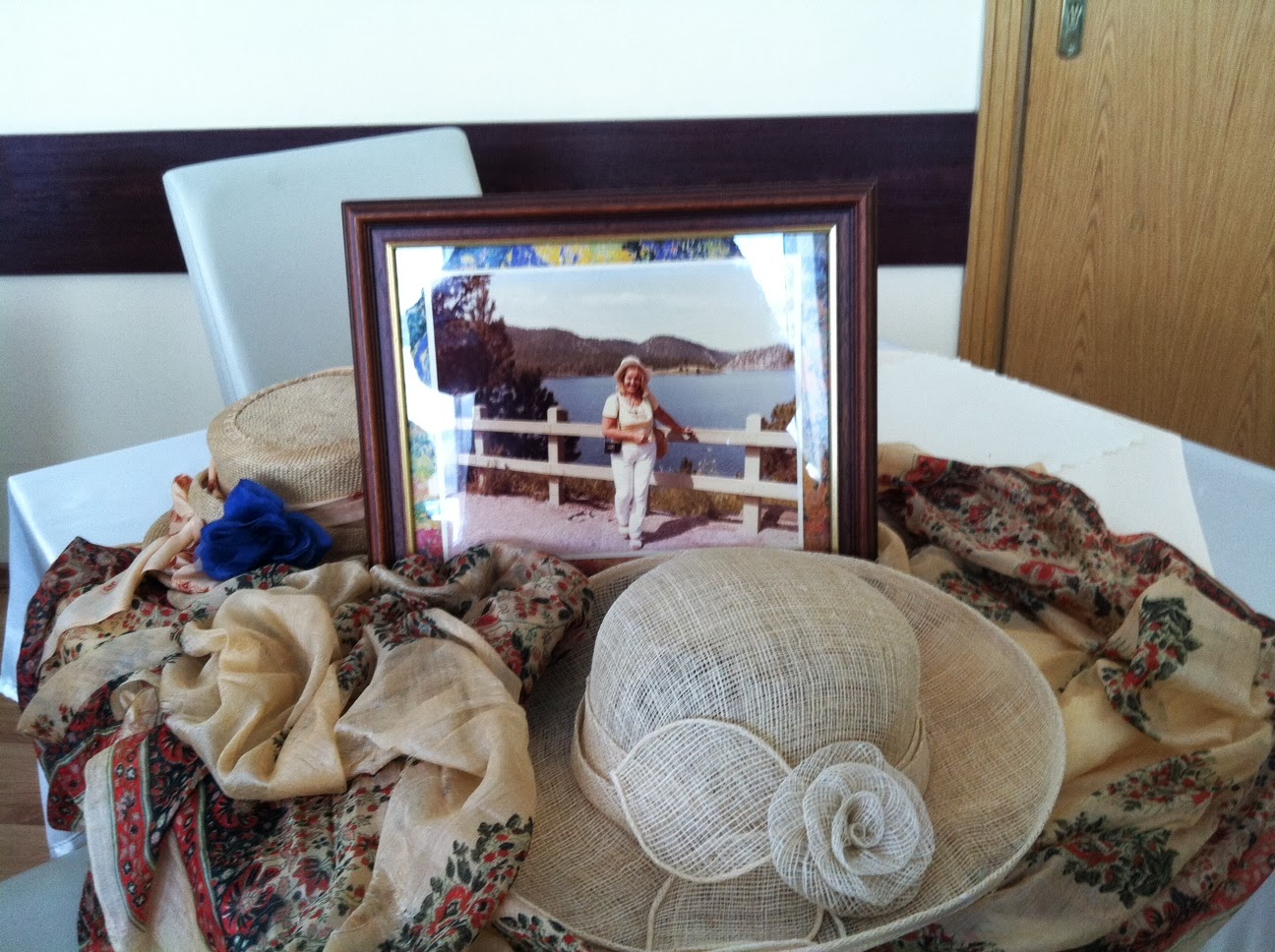
Showing posts with label Warsaw. Show all posts

Thursday, November 9, 2017

On Oaks, Maples, Gold Leaves and Angel Wings


When you travel you try to be in two places at the same time, where you live and where you are a guest. The timelines split and you enter the wonderful country of what if... 

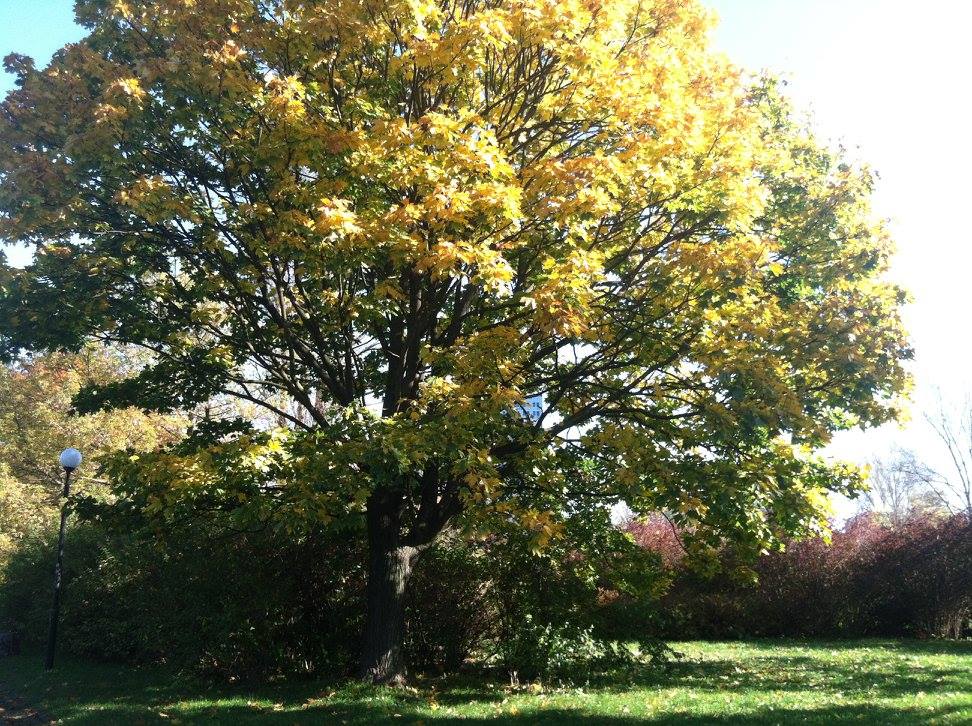
Ujazdowski Park in Warsaw, Maple Tree.

In my recent travels to Poland I spent some days in Warsaw, walking through its wonderful parks, admiring the ancient trees, and then a week in Krakow, where the Old Town is surrounded by Planty - a park built in place of city walls and its moat.


In Warsaw I visited the Orthodox cemetery where my parents are buried. They both loved picking leaves in the park on Sundays in autumn. And the trees around the tombstones are full of birds singing, talking to each other... And the breeze flutters in the treetops... And it is quiet, and tranquil, and all is well...A place of reflection and rest. No wonder Poles especially Polish widows spend so much time in cemeteries!


and here we are
with bouquets of bronze leaves
timeless in sunlight


I spent most of Sunday and Monday  in October wandering around my beloved Warsaw - Pola Mokotowskie (Pilsudski Park) and Park Ujazdowski with the Paderewski Monument, and the Old Town, were the highlights of course....

striped with shadows
gold oak leaves get ready
for winter

I called those leaves "real oak leaves" and my son said, what do you mean, Mom, so California oaks are not real? Not in the same way, to me. Of course beautiful, especially when you see them, dark green and perfectly shaped, outlined against the gold grass... but the colors are reversed in Poland where the grass is always green (or covered with snow) and oaks reach for the glory of the Sun in their majestic golds and bronzes... 

no, we will not go -
said the leaves on one oak tree
in November


my oak leaves
turn sunny gold and bronze 
before first snowfall   

a blur of gold leaves
waits for the chilling wind - 
end of summer

so above as below
gold on the ground,  gold in the sky - 
last days of autumn

all made of gold -
I drink pure sunlight 
at noon

red, bronze and gold 
paint steps into bareness - 
last days of freedom
I witness it all - 
tragedies and joys pass  by  
under my branches

my path of treasures
no time to pick them all - 
an autumn rainbow


do leaves exist for
branches or branches for leaves?
there's no answer


many winters
one war after another -
the one to last

maple bright, maple right
paints the blue sky 
day and night

gold maple leaves  - 
uncounted on twisted branches,
explained by sunlight

Apparently at the end of the 19th century Krakow had such bad climate, it was Poland's capital for tuberculosis and other respiratory diseases, so the City Council made a bold decision, protested by many, including the famous painter Jan Matejko. But history had to give in to health, and the walls were taken out, moats were filled and trees planted, now ancient and surrounding the city with a beautiful green or gold ring. . .


Autumn Wings

A blue-winged pink angel
landed on my desk with a flutter, left one
soft white feather and disappeared
with a smile suspended in mid-air
like the Cheshire Cat.

I’m Alice in Wonderland,
as I wander and wonder,
bewildered by the beauty
of gold leaves under my feet,
mystique of sunrays piercing the fog
patiently filling spaces between 
church towers and ancient 
maple trees receding into silence.

Swish – swish –  the angel’s wings
above me. Swish – swish – 
crumbling leaves mark every step
as I walk through the golden park – 
its beauty unnoticed by passersby
rushing to appointments, parties.
Yet, this glory will sustain us.
This is what is – I stop to breathe in 
the scent of autumn leaves 
and last pale roses faintly disappearing 
into the silence of sleep

marked by the flutter of wings, 
blue wings of my brown-eyed angel.
Shy, demure, he looks down at his feet,
bare toes sticking out under  the pink  robe.
Oh, what delightful noise they would make
when he walked between the massive 
oaks, shrouded by the evening mist

swish – swish – swish  –
now and forever
swish –swish – swish – 


September in Krakow, 2017


And now, that we are in angelic realms, let's read one more angelic poem:

     Just One Secret

      Are you born of untold darkness?
      Are you a child of light?

     When was the last time
     you saw an angel in Hollywood?
     Awesome, majestic,
     dressed in light and ten feet tall?
     With rainbow wings
     perhaps, and a diamond crown?

     This gentle brightness
     is here to guide you
     hover above, guard your back - 
     It casts no shadow so you see
     clearly each turn and pitfall
     on your path.

     This is no faith, no hope,
     just plain knowledge - 
     look all around you,
     open your eyes -

    There is one beside the Superman
    another one above Snow White
    with too much makeup 
    Batman goes hand in hand  
    with his invisible winged twin

    An archangel watches over
    Darth Vader n a tattered cloak
    (in case the light saber is real)
    and a clown cannot shake off
    a flock of putti that giggle
    while pulling on his top hat.

    Cherubs, Seraphim
    with six wings, halos - 
    pure, luminescent
    dazzling and brilliant

    they simply ARE!


There is yet another "angel" poem that I posted here in December 2015 after coming back from Paris, "An Invitation to the Dance" (see http://poetrylaurels.blogspot.com/2015/12/on-polish-christmas-in-paris-at-notre.html). It was officially published in the Altadena Poetry Review 2016, and then reprinted in the Poetry and Dance II anthology in 2017.  It will also appear in the new version of Rose Always - A Love Story, where it belongs.


Friday, June 20, 2014

The Fourth of July - Commemorations of Freedom, Life, Death...


It is a year already since my Mom died on the Fourth of July, 2013. I was riding in the Village Poets Car in the Fourth of July Parade in Sunland.  Her manifold illnesses have finally caught up with her.


The Color Guard

Above the hills' crooked spine, clouds dissolve
into the azure. A red rose lazily unfolds.

It blossoms by the birch tree, petals
glowing with the innocence of lost summers.

White bark hides among green leaves,
pale oleander spills over the picket fence,

shines against the deepest blue of the iris.
Its yellow heart matches the sun's golden glow

bouncing off the brilliant sphere of stamens
wrapped in the bridal silk of matilla poppies.

My garden presents the colors at noon
dressed in the red, white and blue of the flag.

At night, the fireworks tear the indigo fabric
into light ribbons and multicolored sparks.

The visual cacophony echoes the loudness
of sound explosions imagined by the genius

life insurance salesman, Charles Ives.
The orderly march of brass anthems

scatters into the joyous chaos of laughter -
a child's delight - the Fourth of July.

 (c) 2010 by Maja Trochimczyk


The fireworks of the Fourth have ended. My Mom is gone, buried with my father in Warsaw's Orthodox Cemetery, among beautiful ferns, tall chesnut, maple and linden trees, their canopies filled with birdsong. It is a luxurious, peaceful place; both elegant and melancholy. You think of death there with gratitude for the full, rich lives well lived. I visited it again this week, upon arriving in my home town for the Fifth World Congress of Polish Studies held at my alma mater, the University of Warsaw.


I still have two phone messages from her, recorded in early June, a month before her death. When the recorded voice tells me they are old, I save them again. She called me to wish me a Happy Children's Day (June 1). Her voice was feeble, coarse. She sounded frail. She did not have much energy left. I have walked this earth for more than half a century and I was still just a child to her, a lovely, beloved child. A spoiled brat who wasted many gifts. A grateful daughter.


I celebrated the memories of my parents in a strange way soon after that: by writing down their most painful war memories of deprivation, hunger and a multitude of horrors. I made them into a book of poetry, "Slicing the Bread" - with a subtitle "Children's Survival Manual in 24 Poems."  It is a tough, rough book, without my usual sentimentality, sensuousness, and warmth, without the delicate spiritual inspirations that have been a hallmark of my poetic style.

This book of 25 poems, had already found a publisher, but I'm wondering what to do about its cover.  Should it be a medal on the bread?  It is about hunger and slicing, saving bread, after all. Should it be my mom's engagement ring on a slice of bread?


The publishers also asked for pictures of me. Should I have a new portrait made in Warsaw, with my beloved city in the background - a slice of an Old Town, or a wall still covered with bullet holes, perhaps? Or the greening of the linden trees? Filled with honey bees? They buzzed, alive with the promise of sweetness, all summer long in the village of my grandparents.


I have not written any "regular" mother-daughter poems; I could not write yet about her death and suffering, not about hospitals, not about the bullet that pierced her lung, an inch away from her heart, not about the blood pooling on the cement floor of the basement after she was shot and slipped in and out of coma. I should write about her sailing adventures, her travels around the world, her delicious cakes and gourmet stews, and wild parties, dancing all night, making that unique New Year's Eve's dress right up to eight o'clock, in time for the party... She loved picking mushrooms - a harvest of "prawdziwek" in a oak and birch forest...


Hmm, mushroom picking, I picked up that passion from her. She also spent her free time taking thousands of photographs, developing them in the darkness of the bathroom with a checkered blanket covering the window, a purple light bulb casting an eerie light on our faces, images slowly emerging on the paper soaking in chemical baths...Now, I'm a photographer, with a digital camera and colorful online albums.

No, I am not ready for a true memorial poem yet. Here's one poem about a gift from her, then, a tribute of sorts to her personal taste and flamboyant style...

My Scarf  (An Assigned Object)

Wine-red and grey, embroidered, sparkly –
I’m safe embraced by its warm hug –
I'm elegant adorned with its rich patterns –
I'm dressed in a new persona.

My scarf came from a high-fashion world
Of folksy make-believe
That trickled down to discount stores
–  Made in India –

It brought back my Grandma’s shadow
With her wool chustka of a Polish peasant,
It came out of my Mama’s suitcase
Gifts of handmade comfort
And exotic splendor

It carried a distant reflection
Of a silk white shawl
That covered my shoulders with light
At the end of my baptism

It was a foreboding of the shroud
That will wrap me to burn when I die.

© 2007 by Maja Trochimczyk

After the funeral, I brought her favorite off-yellow patterned silk scarf with me to L.A., I wore it with a black dress, wrapped myself in the scent of her perfume. In vain. There were deep gaps in the scarf already, shredding in the corners, torn. It was beyond hope last year. Now, the fading silk is just a limp reminder of a former subtle, supple beauty, slowly disintegrating in my closet. I cannot throw it out. No. Not yet.


Wednesday, February 12, 2014

Leonardo's Lady with an Ermine, the Royal Castle, and the Monuments Men


The Royal Castle in Warsaw in 2013.

There is a new feature film, fact-based and shocking, about the destruction, looting, and recovery of artworks by the Nazis. George Clooney's "The Monuments Men" is a work of fiction, but "The Rape of Europa" - a 2006 documentary that first brought these issues to the world's attention, is not.  I found its depiction of the whole scale purposeful robbery and vandalism conducted by Germans in the whole Europe to be fascinating, with lots of unknown footage and mind-boggling examples. The four countries that are at the heart of the story were treated differently by the race-obsessed Germans: the artwork of the inferior, "slave" Slavic races of Poles and Russians could, or should, be destroyed, the artwork of Italy and French just stolen. Modern art was destined for destruction everywhere, but "classics" had a chance - especially if they could be integrated into the mythology of the "Aryan" race.

Ruins of Warsaw's Royal Castle in 1945.

Apparently, the mass murderers from the NSDAP and SS were ardent admirers of high quality antiques and masterpieces of Western art. So much so, that they took and hid these pieces for their own "consumption" and for placement in their own "museums." A lot of that art was looted from Jewish owners, targeted and systematically stolen, while the owners were murdered. Some paintings and sculptures were taken from state museums, some from palaces of aristocrats and kings, some from art galleries. Nothing was sacred.

The Castle Square (Plac Zamkowy) in the Old Town of Warsaw.

Poland, the first target of Hitler, the nation destined for physical extermination and cultural annihilation, suffered some of the most grievous losses of WWII.  It never surrendered, did not form a "colaborator" government that worked with the Nazis, like the Vichy in France. The Holocaust of Jewish Poles and Polish Jews is a crime without parallel. But the suffering of Poles was immense, too. Poland lost 3 millions of its Jewish citizens and 3 million of its Polish inhabitants. The destruction of Polish culture was a particularly significant goal for the Nazis, along with the killing of the cultural and national elites - officers, professors, artists, the clergy. Anyone with a brain and a position of power could become a target. Members of my mothers' family were on the list: two priests, Karol and Feliks Wajszczuk, ended up in Dachau, one survived, one was killed - for supporting the underground resistance.

In 1944, the Royal Castle and the whole city of Warsaw were systematically destroyed, holes drilled into walls, stuffed with dynamite, and exploded; fire-throwers used to set the interiors and libraries aflame. Poles rebuilt what they could after the war, recovered  some artwork, not all - it was returned by American Monuments Men, by the Soviet government. But many important pieces disappeared without a trace. The destroyed buildings were reconstructed, the originals irreparably lost.  I used to go to music school in the Old Town, Music High School named after Jozef Elsner, the teacher of Chopin. The school was on Miodowa street and the best way was to take the tramway no. 26 and go through the W-Z Tunnel, under the old town. When I was coming back from my lessons I looked up into the empty window hole in the last wall of the palace, pointing towards heaven, lonely, damaged, forlorn.  I still remember its angular shape next to the full  moon, above the rooftops of the old town. I was happy to see it rebuilt; it took many years. But the palace looked too new for me, and still does. It is a simulacrum, a model, not the real thing.

_________________________


In 1944, a beautiful song was written by a Polish-Jewish popular music composer, Albert Harris, a farewell to the dying city. He composed it in Italy, at Monte Cassino, as a member of the Polish army that was fighting at the Nazi stronghold. Harris joined the General Anders' Army that was formed from Polish refugees, and prisoners in the Soviet Union, then joined the British army in liberating Italy. After the war, the soldiers were scattered around the world. Britain did not want them, they went to Canada, Australia, the U.S.. Harris ended up in America. His Warsaw song became so popular after 1945, that it was even translated into Danish and became one of Denmark's greatest hits.

http://www.youtube.com/watch?v=SEwIkP6H3es = Albert Harris, Song about My Warsaw (Piosenka o Mojej Warszawie), in Polish, recorded by W. Sypniewski in 1945, illustrated with pictures of Warsaw in 1939 and after its liberation.


http://www.youtube.com/watch?v=RGH-Ffbvubg = Albert Harris, Piosenka o Mojej Warszawie in Danish, recorded in 1946.

______________________________

The famous portrait by Leonardo of the Lady with an Ermine was one of the most notable recoveries of the Monuments Men. An image of the mistress of Italian Duke Sforza, painted in 1490, the portrait belonged to the Czartoryski family of aristocracy and kept in their private museum in Krakow, Poland. After being stolen and hidden, it returned to Poland, thanks to its discovery by the Monuments Men of General Eisenhower - art historians sent along with troops to organize the recovery and restoration of stolen or damaged artwork. They found the Lady in a hunting lodge of Nazi ruler of Poland, General Governor Hans Frank. It was then returned to Poland to the museum of its original owners, the Czartoryski family, and then "nationalized" - now it is found at the other Royal Castle of Poland, Krakow's ancient Wawel Castle (the kings moved to Warsaw in the 17th century, and Wawel was not destroyed, so its old walls are really old...).

The painting's story is quite convoluted, its beauty - still astounding. I decided to write a poem in praise of its beauty and history. Here it is, a brand new reflection on Leonardo's gift to the world.


The Lady with an Ermine


Leonardo’s brush created a vessel for her to inhabit,
a grey blue sky they painted black much later –
she was pregnant, her son – a Sforza heir, 
her lover – a Duke, a white ermine – his emblem.

In 1830, with her Polish princes, she went
into exile through Dresden to Paris, locked
in a box of precious wood. She came back. https://mail.google.com/mail/ca/u/0/images/cleardot.gif

In 1940, hidden again, she was safe until Nazis 
found her – Governor Hans Frank fell in love,
in a palace he had stolen in Kraków, 
in a hunting lodge he had built in Bavaria. 
The Red Army was closing in.

She felt a slight discomfort in the crisp winter air
when American soldiers held her up, 
for the cameras of Monuments Men.

Another train ride. The navy darkness of a museum wall.
Under a muted spotlight, schoolchildren play a game:
Walk briskly from right to left, don’t let your eyes  
leave her eyes, see how she is watching you.

Her eyes follow me around the room
with that secretive smile she shares
with her famous cousin. She sees my delight,
caresses  the smooth, warm ermine fur.

She knows that I know that she knows


© 2014 by Maja Trochimczyk, written on February 11, 2014

This is the first draft of the poem, subsequently revised and posted on this blog in 2015, 
http://poetrylaurels.blogspot.com/2015/09/give-it-all-away-love-and-light-poetry.html

as well as on the Mary Evans Photo Depository, in their poetry blog:  
http://www.maryevans.com/poetryblog.php?post_id=7032

There is a recording of me reading this poem in Paris: 
https://www.youtube.com/watch?v=TI-LHJYgwbk


If you need to read love poetry on Valentine's Day or its weekend, visit Moonrise Press Blog for sample poems and a series of links to other poetry of love and reflections on Valentine's Day and types of love, and its folly. 

http://moonrisepress.blogspot.com/2014/02/poetry-of-valentines-love-and-roses.html

Saturday, September 24, 2011

One Hundred Thousand Poets For Change - Me Too!

One of the poetry groups I love spending my time with, Westside Women Writers, had a scheduled meeting today, the last Saturday of September. We were to meet at Georgia's home, bring one poem each, do a workshop, you know, the usual. (We means: Georgia Jones-Davis, Kathi Stafford, Susan Rogers, and Millicent Borges Accardi, the founder and spiritus movens of the group). But then, Millicent, our fearless leader, said: "Wait, did you know this Saturday is the Hundred Thousand Poets for Change event? We have to do something." So that something we did was to read poems, of course, one extra poem each, on the topic of peace, or the transformation that is needed in the world to change its evolution from the current downward slide into chaos and violence.

So it would be peace poetry, anti-war poetry, environmentally-friendly poetry, activist poetry, involved in fixing the evils of this world. The trouble is I do not write this sort of stuff, at least, not obviously so. The closest I get to war themes are my poems for the paintings and art of Manzanar - inspired by art created at the annual Plein Art Workshops of painters conducted at the site of the former detention camp for Japanese Americans and in nearby mountains. The artists have a group show at the APC Gallery in Torrance, curated by artist and gallery owner Ron Liebbrecht. Poets on Site come to write poems and a wonderful book gets published.So every hear, I get closer to the heart of Manzanar, step by step. At the beginning, I studiously avoided the topics of barbed wire and watchtowers, focusing on sunsets instead. I thought that poetry should be more subtle, more ethereal, more of the sky than the earth, and then I found this digital collage by Beth Shibata, photographer and poet, connected to the topic of Manzanar through her Japanese-American husband.

Entitled "What we saw, what we dreamed," Beth's piece is a stark photograph of sharply outlined bare mountains and a pink sky above filled with paper cranes. I thought that they were dancing and called my poem "Skydance." I also dedicated it to Henry Fukuhara, the blind painter who was imprisoned at Manzanar as a child and established these workshops 14 years ago to help heal the wounds through art and keep the memory alive. Henry's friends, Ron and Beth, are doing exactly that, as the workshops and poetry writing goes on.


SKYDANCE


~ to Henry Fukuhara and the prisoners of Manzanar


the mountains rose and fell
with their glory useless –
trapped in time they did not
think they’d make it –
days so long, stretched
to the horizon, mindless

and the sky danced above them
avalanche of paper cranes


it was not a time for joy
the landscape said –
bleak, unforgiving,
it was not that time yet –
in gaps between minutes
a shadow rose, a breath

and the sky danced above them
spring dreams of paper cranes


contours remembered,
felt in the fingertips
filled the world with color
faded pastels, knowing,
pale rainbow, hues
of distance, peace, serenity

and the sky danced above them
paper cranes, oh, paper cranes


What is a paper crane for? In a Japanese tradition a thousand origami cranes, held together by strings is a wedding gift; apparently after making a thousand of cranes a real crane will come and grant you your wish. They mean that your wish will come true and that you will a very long and happy life. Beth Shibata's artwork places these strings of cranes in the sky, like semi-transparent shadows they are a wish that a wish would come true.

But is this my wish? I'm not Japanese, I'm barely American, having become a citizen only in 2009, after having lived here since 1996. What would my wish for change be? I am not one to speak up about politics, to go to demonstrations. I've learned my lessons from a childhood spent in communist Poland, where you had to hide what you thought, never admit to what you knew, and, in general, make yourself invisible, so you would not be noticed by police and get into trouble.

I know it is impossible to change the system when you need to change it. It will, eventually, evolve, like a dinosaur, moving slowly through time, too slowly for an individual life. The only change we can make, the only transformation we can control is the personal one: we are all challenged to evolve on a spiritual scale, to become more enlightened, better people. I have written a lot of poems about this and will keep writing, but is it something to share in public? I wanted to read a different poem for A Hundred Thousand Poets for Change, a poem about the only change I can make, I can control: my personal quest for light.

AT LAST

- to Theilhard de Chardin in gratitude for his visions of cosmic fire

Brown, muddy, dirty –
the river rushes down its course
to the ocean. The rains pass,
years go by, centuries, ages –
silt into stone into sand.
The circle turns – grinding, crushing.

A spark in the cosmic fire
I rise upward, striving
to shine above the murky waters
that have to flow down,
pulled by gravity.
I’m free to choose – right or wrong,
good or evil. My anger’s gone,
burned by the flame,
that left only ashes
falling into the darkness below.

I ascend through constellations.
Higher, lighter – regrets fall off.
The weight of nightmares lifts.

The crystalline sphere sparkles
as I waltz into the ever greater,
ever brighter blaze of holiness,
spreading above the void.

Tranquility expands, singing
“Consummatum est.”


_______________________________


The last words of my poem, "It is done," are the last words of Christ on the cross, in the old-fashioned Latin. I studied it for a year in high school and three years in college. I like quoting Latin, it is a part of my world, that unique sphere of ideas, memories, thoughts, dreams, and things I've done that marks my place in the world.

My wish for the new world is simple: if everyone did what I'm trying to do, ascend into the light of love, there would be no wars, no violence, no greed, no theft, no betrayal. Maybe then people who run countries now would apologize for what their countries did to other people at other times. Just look at Japanese-Americans, how they were suspected of being secret enemies of the state, how they got three weeks to pack up their lives and go to live in some desolate place, with one of everything, one doll for the child, one pair of shoes. . . But then my Polish family when they were kicked out of their property in the land that was Poland but became Soviet Union, were given 24 hours to decide what to take and what to leave.

They lost everything, except their lives and their heroic, noble spirit. Short on money, long on nobility - virtues grow in poverty, so maybe being poor is not so bad, after all? Why did my grandparents have to run, sell what they can, sew the gold coins into the lining of my mother's coat, see it ripped apart by the guide who was to take them to safety on the other side of the river Bug.... Why? Because Hitler signed a deal with Stalin in 1939 and Roosevelt and Churchill signed another one in Teheran in 1943 and again at Yalta in 1945. They sold Eastern Europe to the despot and murderer. They sold my grandparents lives, and those of millions of others.

And what about the British Queen? The Polish pilots from RAF Squadron 303, who defended her country in the Battle of Britain, wrote a desperate letter to her in 1944, begging for British intervention to save Warsaw at the time of the Uprising against the Nazis. After the initial victory and through the 63 days of fighting, the Russian troops stood idly by and the city burned. Over 200,000 people were killed there, including 170,000 civilians; when the underground Home Army capitulated, the city was emptied of all residents and dynamited, street by street... Where is the Queen's apology for not intervening?

Polish people are resilient, they know how to rebuild and rebuild again. They decided to remake the old Warsaw based on 18th century paintings by Bellotto Canaletto. The Old Town came to life, filled with cafes and jewelry shops selling Polish amber and silver. The Royal Castle remained in ruins for more than twenty years. I used to walk by on the way to my music school three times per week right by its last standing wall with one window opening into the night sky. The rest was a pile of grass-covered rubble. Now, the Royal Palace is again magnificent, even better for being made new.

What can the poets do to change the world? Remember, inspire, and love.

_____________________________


Poetry and Photos of California sky (c) 2010 by Maja Trochimczyk
Beth Shibata's "What We Saw, What We Dreamed" (c) 2010 by Beth Shibata