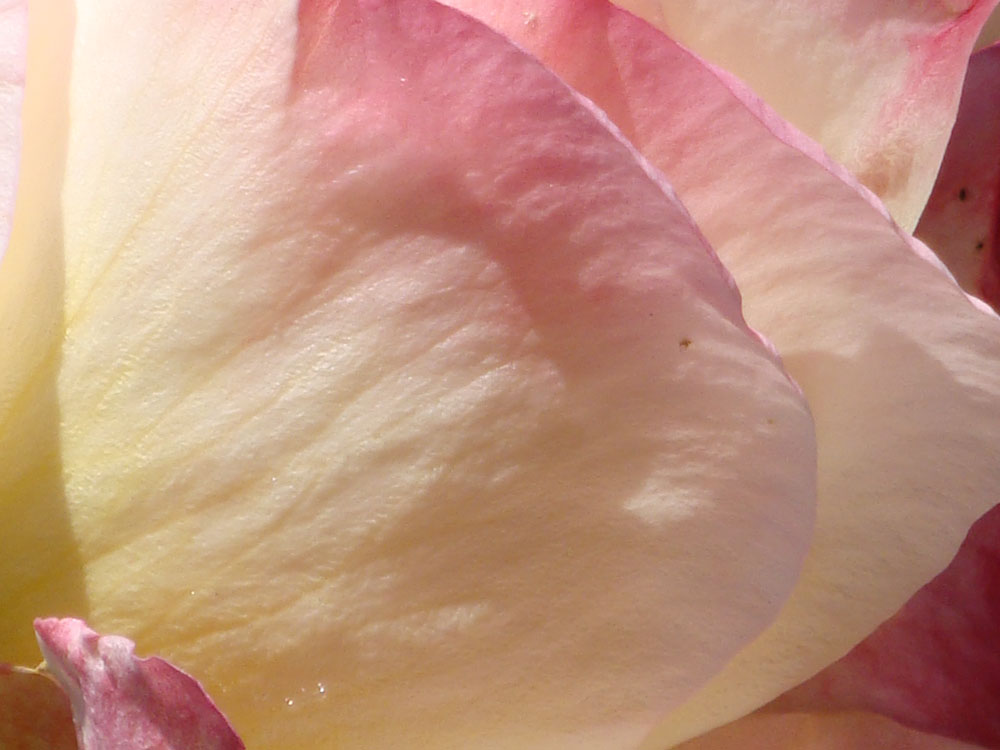
 |
| Petals of Chicago Peace Rose. Photo (c) 2008 by Maja Trochimczyk |
The association of roses with love goes back to the times of Sappho, an ancient Greek poet (or, rather as 19th century writers would say, poetess), whose fragments of love poems, have inspired countless poets with their vehement passion and colorful metaphors since her death more than two and a half thousand years ago. In Elizabeth Barrett Browning’s translation, Sappho’s rose is “the eye of the flowers… the grace of the earth” and “the lightning of beauty that strikes through the bowers / On pale lovers that sit in the glow unaware.” Sappho’s rose “breathes of love” and its petals “laugh with the wind…”
 |
| Rosa gallica rosea flore simplici by P.J. Redoute |
The Song of a Rose
By Sappho, translated by Elizabeth Barrett Browning
For Zeus chose us a King of the flowers in his mirth,
He would call to the rose, and would royally crown it;
For the rose, ho, the rose! is the grace of the earth,
Is the light of the plants that are growing upon it!
For the rose, ho, the rose! is the eye of the flowers,
Is the blush of the meadows that feel themselves fair,
Is the lightning of beauty that strikes through the bowers
On pale lovers that sit in the glow unaware.
Ho, the rose breathes of love! ho, the rose lifts the cup
To the red lips of Cypris invoked for a guest!
Ho, the rose having curled its sweet leaves for the world
Takes delight in the motion its petals keep up,
As they laugh to the wind as it laughs from the west.
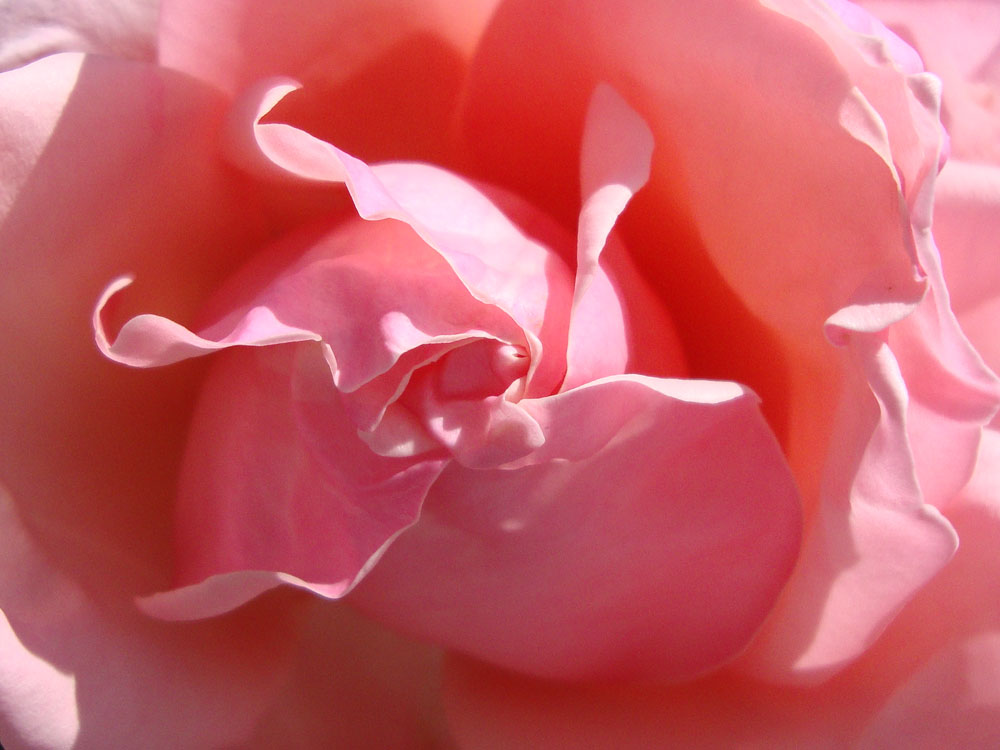 |
| French Perfume Rose. Photo (c) 2012 by Maja Trochimczyk |
The roses that Sappho and Browning wrote about blossomed once a year and had much smaller, though often much more fragrant flowers than the roses we know today. Our long-stemmed hybrid tea roses are the offspring of repeatedly blooming china roses often grafted onto sturdy rootstock of the common dog rose that is resistant to cold and disease. We pay for the year-round abundance of flowers with their fragrance… And, we equate roses with love:
The Smile of a Rose
When you smile
Heaven opens
and the earth grows solid
under my feet,
no longer quicksand –
I breathe slowly
When you smile
pink roses bloom
in my autumn garden,
the pomegranate ripens
in late sunrays –
I fear no one
When you smile
Bach’s partita for solo violin
fills the room
with the air of beauty –
angels dance,
I dance with them
© 2008 by Maja Trochimczyk
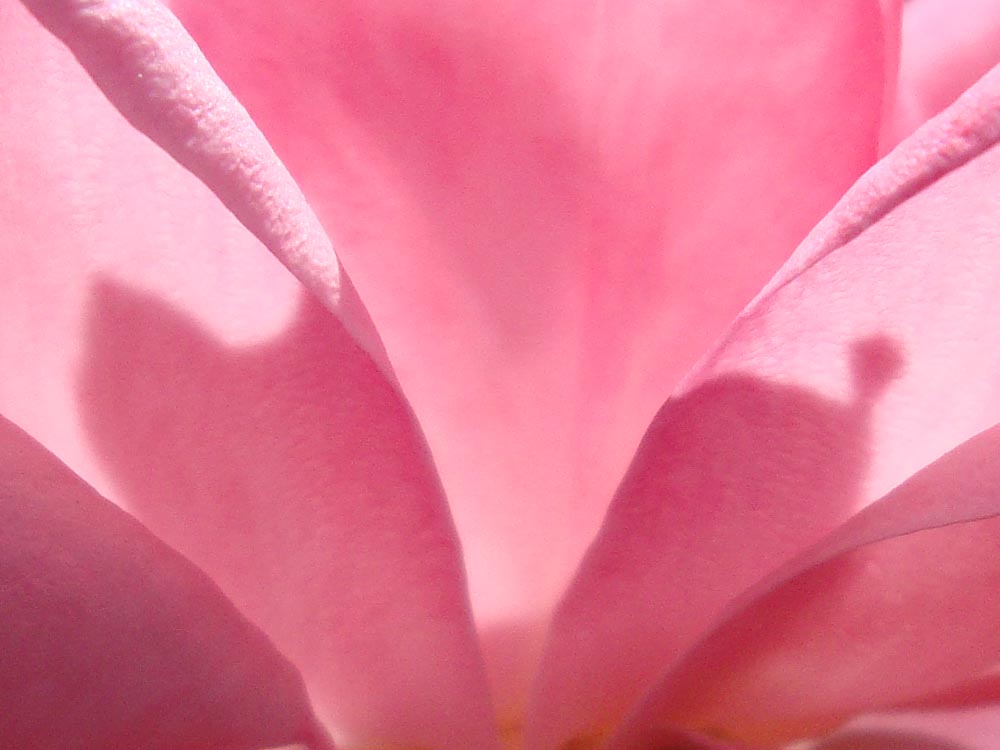 |
| Photo (C) 2011 by Maja Trochimczyk |
Napoléon’s first wife, Empress Joséphine, (de Beauharnais, 1763-1814, crowned in 1804, and divorced in 1810), loved roses so much she dedicated a garden at her summer residence Chateau de Malmaison to these magnificent flowers. Assisted by an army of gardeners, she managed to gather over 250 varieties in a formal rose garden that after her death in 1814 and the fall of Napoleon in 1815 fell in disrepair, but not before her roses were immortalized in painting.
 |
| Rosa gallica aurelianensis by P.J. Redoute |
Who has seen the living beauty of sempervirens, boursaults, or ayshire Old Garden Roses, grown from European sturdy stock and Chinese repeat bloomers? These antique varieties, long forgotten by gardeners, were immortalized in Redouté’s paintings.
Pierre-Joseph Redouté (1759-1840) recorded the shapes and hues in splendid watercolors, while Claude-Antoine Thory provided vivid, botanical descriptions. Les Roses still delight with their now exotic beauty. The shapes of most blossoms in Redoute’s paintings are quite different from the tall, tubular flowers we know from mostly scentless hybrid teas of our times. These were the gallicas, albas, damask, china, and moss cultivars of Old Garden Roses. Many blossomed just once a year and had a lovely fragrance; they were all the more precious for it. The Souvenir de la Malmaison not by Redouté), a bourbon rose with multiple petals, survives as a reminder…

Rose Souvenir de la Malmaison, 1843
Here’s a lovely variety of Rosa Gallica, called by the French Rosier d’Amour and the Germans rose d’Autriche, or the Austrian rose. Its description in Empress Joséphine’s book is poetic in its own right, especially for readers who do not know biological terminology:
“Its stems are armed with thorns… that break off easily, leaving numerous scars. The leaves consist of five… oval leaflets… doubly dentate with glandulous edges… The Rose of Love has a corolla of five petals … The aromatic flowers grow singly or in clusters or two or three at the end of the secondary branches… The pyriform and slightly hairy fruits are reddish or orange when ripe. They last well into the winter.”
 |
| Rose of Love - Rosier d'Amour by P.J. Redoute. |
Rosier d’Amour
Fresh, moist petals open
the rose blossoms
in the garden of delight, beauty
She waits for the one
who’d reach past sharp thorns,
past her childish defenses
into her heart
She longs to be touched
and admired for her colors,
for her velvety glow
For the intense burst of pleasure
seducing the one who cares enough
to come with a simple offering –
a life for the rose
© 2008 by Maja Trochimczyk
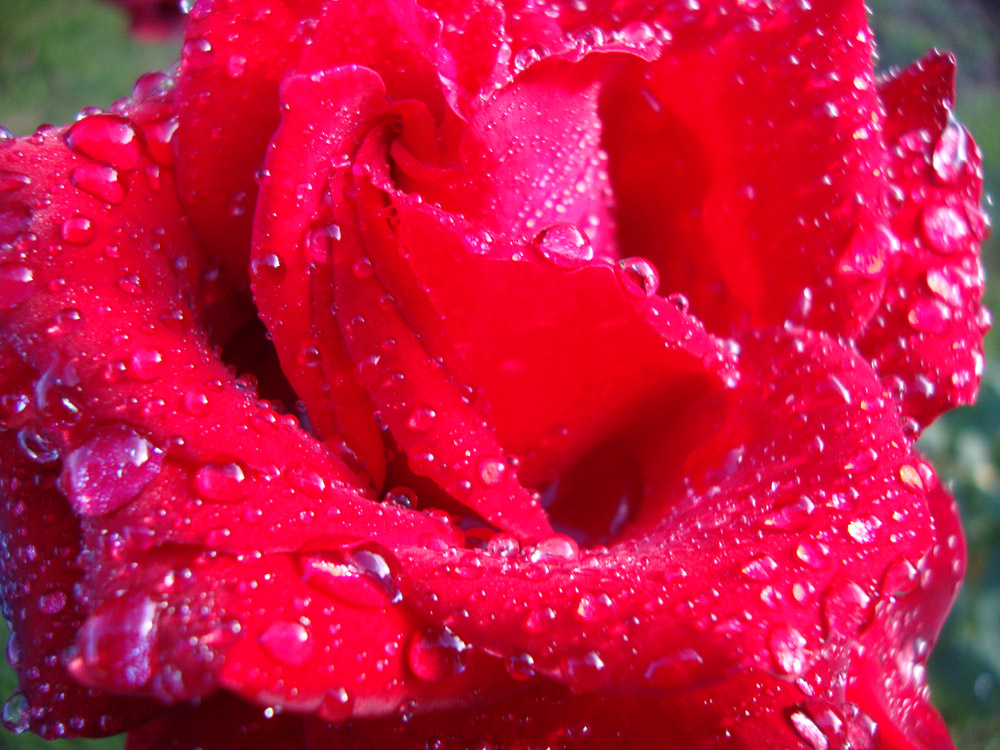
The Latin name of this variety is “Rosa gallica pumila” and it refers to the small size of the shrub, graced with enormous, bright red flowers. But how does “glandulous” look like? And what about “tomentose” (not to mistake for “comatose”)? The meaning of “Pyriform” we can guess – it probably refers to the shape of the flame, that, just like the flame of true love, lasts well into the winter.
The Latin name of this variety is “Rosa gallica pumila” and it refers to the small size of the shrub, graced with enormous, bright red flowers. But how does “glandulous” look like? And what about “tomentose” (not to mistake for “comatose”)? The meaning of “Pyriform” we can guess – it probably refers to the shape of the flame, that, just like the flame of true love, lasts well into the winter.
Apparently, this is a wild rose widespread in Germany and growing with vigor: “it can reappear and multiply almost as rapidly as it is uprooted.” How does it do it? In three ways: “through self-sown seeds, offshoots, and subterranean roots.” (from Frank J. Anderson’s commentary, 1979). For the farmers, it was worse than a weed, because its branches were thorny and when they took it out once, it kept coming back with a vengeance. Now, isn’t it just like real love? Even the unwanted one? If it is real, it will survive anything and everything. It will be unchanged from the day it miraculously appeared, to bless a life that was empty without it, to the last breath on Earth, well into the winter of life. Will it survive beyond the grave? I think it will, but let us return to the roses.

Rosa gallica regalis by PJ Redoute

Rosa gallica regalis by PJ Redoute
The national bard of Scotland, Robert Burns (1759-1796), immortalized the delight of the June-flowering rose and its symbolism of love in a folk-style Scottish ballad of 1794:
Red, Red Rose
By Robert Burns
O my Luve’s like a red, red rose,
That’s newly sprung in June:
O my Luve’s like the melodie,
That’s sweetly play’d in tune.
As fair art thou, my bonie lass,
So deep in luve am I;
And I will luve thee still, my dear,
Till a’ the seas gang dry.
Till a’ the seas gang dry, my dear,
And the rocks melt wi’ the sun;
And I will luve thee still, my dear,
While the sands o’ life shall run.
And fare-thee-weel, my only Luve!
And fare-thee-weel, a while!
And I will come again, my Luve,
Tho’ ‘twere ten thousand mile!
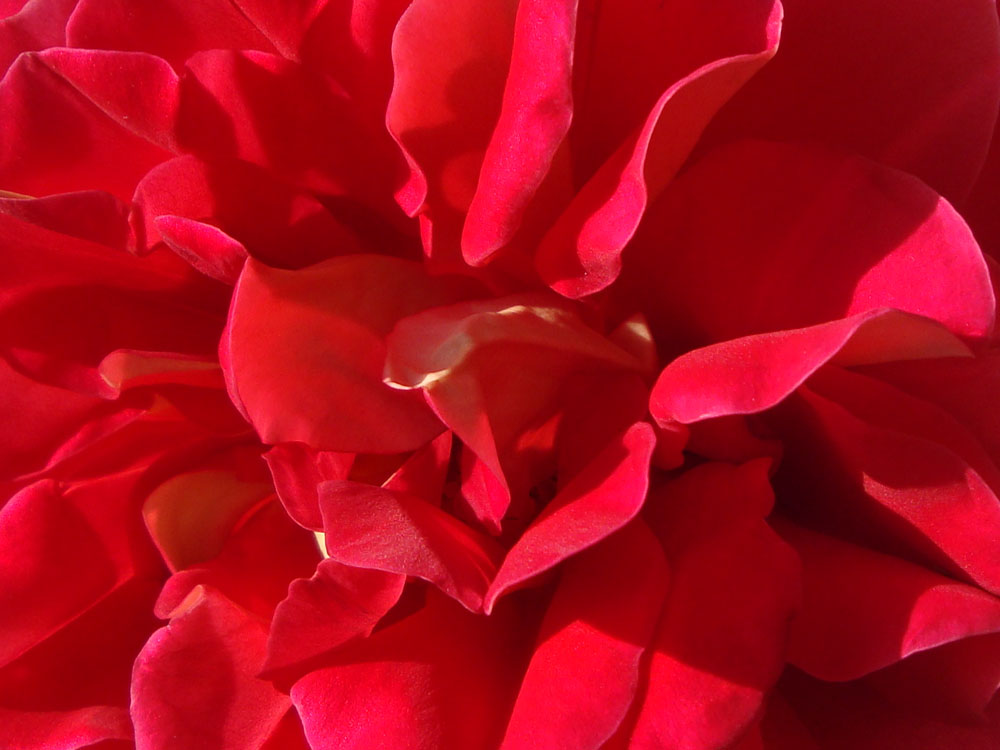 |
| Petals of "Love" Rose. Photo (c) 2010 by Maja Trochimczyk. |
The rose landscape changed when English officers and merchants went to China in the middle of the 18th century. They came back with rose varieties they named after themselves. Thus Slater and Parson in 1752 followed by Hume and Park before 1792 entered the History of the Rose. During the Napoleonic wars, containers with Hume Blush Tea-Scented China Rose imported for Empress Josephine’s Rose Garden were let through the naval blockade. With the oriental newcomers, English and French gardens were filled with rose blossoms from spring through winter frost.

Slater Crimson China Rose by Redoute
The gardeners crossed the “new” arrivals (whose thousand-year Chinese history was not known in the West) with their own roses and nine new varieties appeared, the tea rose among them. Josephine’s gardener, Andre Dupont is credited with inventing this art of hybridization. Through artificial pollination, he created 25 of the varieties found in her Rose Garden.
And look at roses today! How different they are from those of the past. Let anyone who ever saw a rose deny the truth of Evolution, and let them deny the human role in creating evolution… The world is still unfinished and we have a role to play in shaping it, in defining what it will become. For proof, we do not need to look further than a rose and its magnificent blossoms. . . It takes courage to create a new rose. It takes courage to love, as noted by Hafiz, a 14th century Persian mystic:
How
Did the rose
Ever open its heart
And give to this world
All its
Did the rose
Ever open its heart
And give to this world
All its
Beauty?
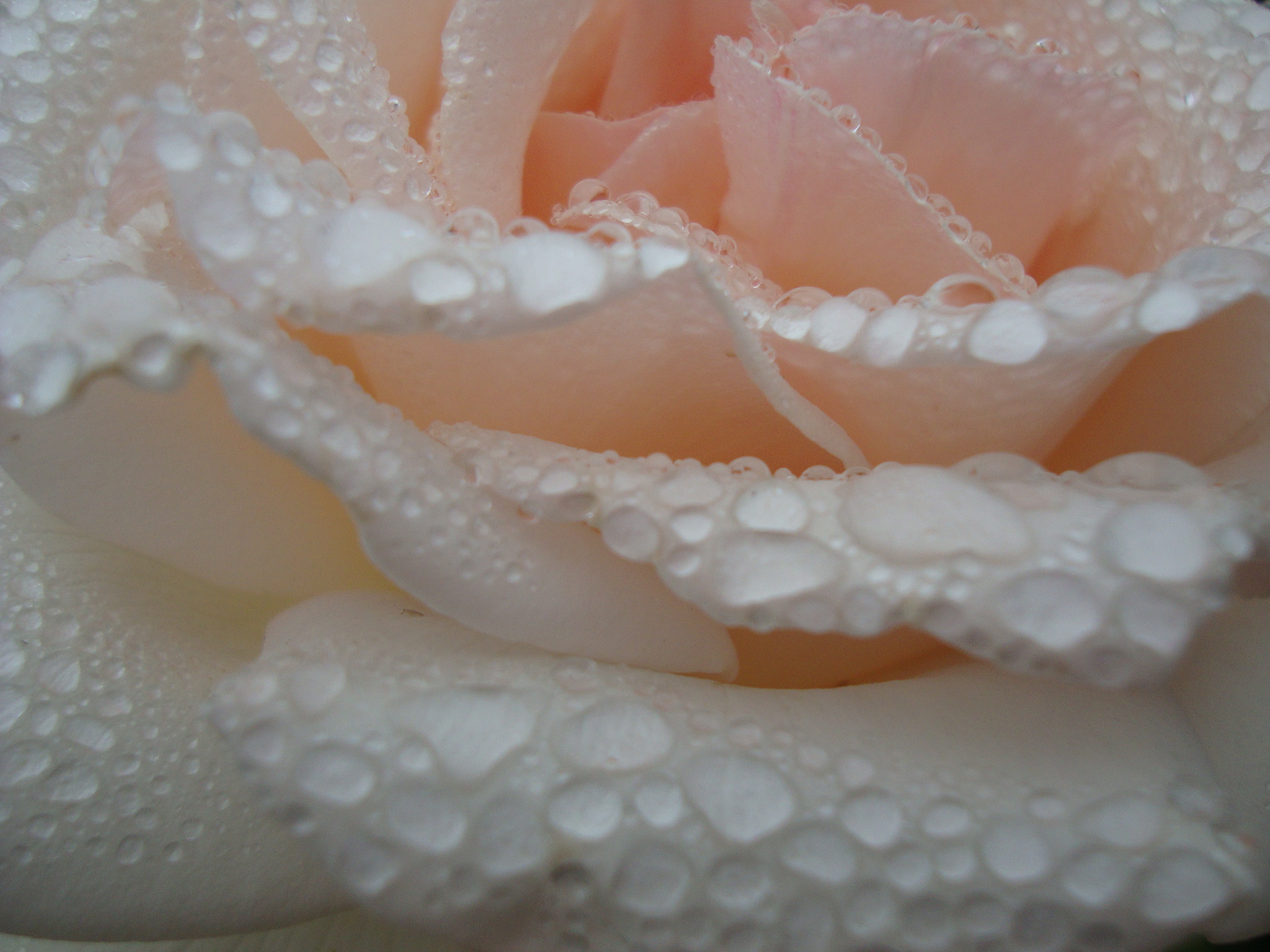 |
| Rose Photo (C) 2011 by Maja Trochimczyk |
But there is one more issue… Is a rose that can be seen year-round and bought every day, as precious as that blossom that only comes back once a year? My love of roses comes from my childhood: watching the miracle of leaves and petals opening on a plant that survived the winter under the cocoon of straw…
Is the love, so abundantly celebrated with red chocolate hearts and endless advertising for St. Valentine’s Day gifts, only valued for its heightened presence in the heat of passion, symbolized by the intense, blazing hues? Or is it the love that survives, day by day, that we should cherish instead? This love dares to blossom endlessly, again and again, well into the winter... Let us celebrate the Valentine’s Day 2013 with poems of love and roses. . .
Is the love, so abundantly celebrated with red chocolate hearts and endless advertising for St. Valentine’s Day gifts, only valued for its heightened presence in the heat of passion, symbolized by the intense, blazing hues? Or is it the love that survives, day by day, that we should cherish instead? This love dares to blossom endlessly, again and again, well into the winter... Let us celebrate the Valentine’s Day 2013 with poems of love and roses. . .
 |
| Rose Photo (c) 2008 by Maja Trochimczyk |
The Rose Garland
I thought roses.
I thought rich, velvet blossoms.
I thought a red rainbow
from deep crimson to delicately pinkish.
The secret was underground
where the roots sustain
the multi-hued orgy of sensuous allure –
flowers opening to dazzle and fade.
The strength of the rose
is invisible – you see the blush
of seduction in each leaf and petal,
You admire their charms.
Yet, you care for what’s out of sight,
not for the obvious.
I thought your love.
I thought how you adore me.
I went deeper down to the source.
The rose, Sappho’s lightning
of beauty, breathes love,
laughs at the wind and wonders.
The mystic rosebush dances,
crowned with the royal
garland of fire.
© 2008 by Maja Trochimczyk
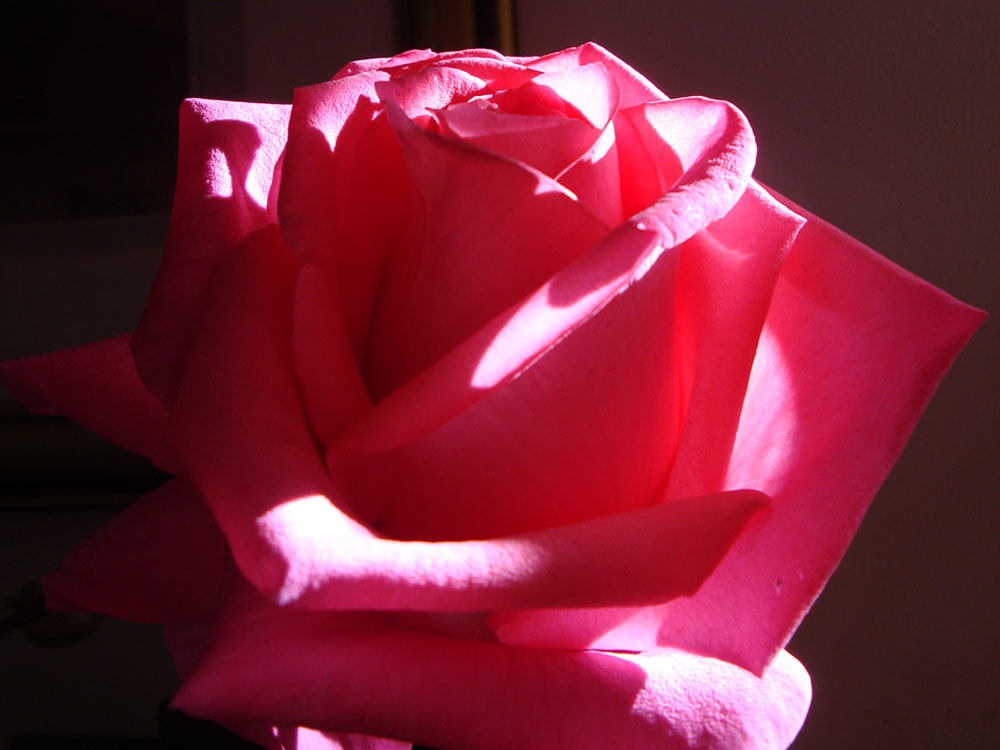 |
| Rose Photo (c) 2008 by Maja Trochimczyk |
NOTES:
Poem by Sappho, translated by Elizabeth Barrett Browning, in Greek Poets in English Verse, William Hyde Appleton, ed., Cambridge: The Riverside Press, 1893.
Pierre-Joseph Redoute (1816-18), Les Roses, 168 plates with descriptions by Thory. The originals burned with the Louvre in 19th century. Copies were published and continue to be reproduced. The text quoted above is attributed to Delanuay and translated into English, in an album P.-J. Redouté – Roses, Liber, 1986.
Frank J. Anderson, ed. The Complete Book of 169 Redouté’s Roses, New York: Abbeville Press, 1979.
John Ingram, The Language of Flowers or Flora Symbolica, including floral poetry, original and selected, with original illustrations, printed in colors by Terry. New York: Frederick Warne, 1887. http://archive.org/details/cu31924067841738
Maja Trochimczyk’s poems are no. 1, 20 and 51 in her book Rose Always: A Court Love Story, third revised edition (Los Angeles: Moonrise Press, 2011)
Maja Trochimczyk’s poems are no. 1, 20 and 51 in her book Rose Always: A Court Love Story, third revised edition (Los Angeles: Moonrise Press, 2011)
More information about roses in poetry and art may be found on the following sites:
All About Roses on Squidoo.com http://www.squidoo.com/all-about-roses#module161480105
_______________________________________________________
_______________________________________________________
COMMENTS
From Lisa Marguerite Mora:
"Thank you for sharing this--beautiful photographs. I love roses too. Especially like this passage from your post: "And look at roses today! How different they are from those of the past. Let anyone who ever saw a rose deny the truth of Evolution, and let them deny the human role in creating evolution… The world is still unfinished and we have a role to play in shaping it, in defining what it will become. For proof, we do not need to look further than a rose and its magnificent blossoms. . . It takes courage to create a new rose. It takes courage to love, as noted by Hafiz, a 14th century Persian mystic: How Did the rose Ever open its heart And give to this world All its Beauty?""
____________________________________________________________
____________________________________________________________


